Tribal Identifications: ISSACHAR

(Adapted from "The Tribes" by Yair Davidiy)

"Of the sons Issachar after their families; of Tola, the family of the Tolai: of Pua, the family of the Puni: "Of Jashub, the family of the Jashubi: of Shimron, the family of the Shimroni:

"These are the families of the Issachar according to those that were numbered of them, threescore and four thousand and three hundred. Numbers 26; 15-18). "And the sons of Issachar; Tola, and Phuvah, and Job, and Shimron". Genesis 46; 13.


1.  The Tribe of Issachar along with other Israelites had been re-settled by the Assyrians in the north, partly in the present-day Iranian area which was then known as Persia. The Sagartii (Asakarta) were first reported of in the Zagros mountains of west Iran and were part of the Tribe of Issachar which tradition associated with that area. A similar group, the SAGARUCE, was recorded by Ptolemy on the east Caspian Sea shore and they have been equated with the Sakaraukae (or Saraukae) who became the ruling tribe amongst the Amyrgian Scythians. The Sakaraukae have been considered as an eastern branch of the Royal Scyths (McGovern p.476, Altheim, "Alexander undo Asien" p.243.) that, in the west, were centered around the Lower Don estuary in southern Russia. The Sakaraukae together with the Amyrgian-Scythians and Goths were conquered by the Asii who relate to the Aorsi. Both Aorsi and Siraci (i.e. Saraukae-Sakaraucae) were to be found also west of the Caspian Sea to the north of the Caucasus.

                 The same groups of peoples tended to appear in close proximity to each other even though separate portions of these nations were spread over wide areas. The Asii have been identified with the WUSUN of Chinese records and these were be the Issedones of Ptolemy. They first emerged from the area of SERICA in east Siberia. This area was once more habitable than it may seem now and supported quite advanced civilizations and metallurgical industry. The name SERICA itself is an inverted form of Issachar -just as the terms Siraciand. Saraukaewere applied to the Sakaraucae who derived from Issachar.

                 In Serica (modern Siberia, east of Scythia) Ptolemy reported the Asmiraea who have a name similar (in Semitic tongues) to that of Shimron, son of Issachar. Ptolemy also placed the Ithaguri and Thogara in Serica and since the "S" and "T" or "TH" were interchangeable the names ITHAGURI (Tagori) and Thogara were also forms for Issachar. Similar names (Thacori, Tochari) were to be found in the general Chorasmian area east of the Caspian Sea where the SAGARUCE-SAKARAUKAE (who also came from Issachar) were located. Later, in Switzerland appear the similarly named Celtic Toygeni and Tigorini allies of the Cimbrians.  Near Serica in the north were the ABII Scythae from YOB son of Issachar (Genesis 46; 13) whose name may be found in the Abus River of Celtic east Britain. The West Saxons in England were called "ABIS Maurunganie" In Serica the ABII Scythae were neighbored by the Sizyges who were associated with the Nephtali and amongst the English Saxons, became known as SCYGS and settled in Essex. The ABIS MAURUNGANIE of England were probably a combination between Issachar (Yob) and Machir of Menasseh. Another entity that may also have come from Yob of Issachar is the Tribe of UBII who settled in Holland.

2.  Groups from Issachar were present  amongst the Anglo-Saxons and company and also with the Celtic-Galatian grouping. The GALATIANS of Gaul were descended from Cimmerians and ISRAELITES who from Phrygia (Turkish Anatolia) came westward. Later the Galatians undertook expeditions to the east and a small group of Galatians re-settled in Phrygia and their area was called "Galatia" after them. The Skirri (Skires) were a group amongst the GALATIANS in Galatia of Anatolia. The SKIRRI belonged to Issachar and (as Skires) had once threatened Greek Olbia on the Black Sea coast and, together with their allies (the Bastarnae i.e. the Etsboni of Gad) had been termed GALATAE by the Greeks (Lot  p.22)  . The Galatae belonged to Gilead of Machir in Menasseh of Israel and in the Land of Israel prior to the Assyrian Exile had neighbored Issachar who also had shared a border of sorts with GAD. Later the SKIRES (i.e. Skirri) of Issachar along with the Bastarnae  were reported on the North Sea shore as part of the Gothic (Gadite) forces. The Bastarnae were descended from Etsbon, son of Gad. Thus elements of Gad and Issachar were marching together. It should be noted that Galatian forces for some time were centered in the Switzerland area which region was destined to become the domain of Issachar. There are some traditional European legendary accounts  (Borchardt) that claim that people from Sweden or Goths settled in Sweden and the people in question may actually have been the Skires of Issachar who had attached themselves to the Gothic forces.

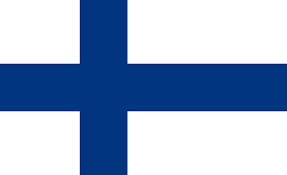
                 Another son of Issachar was PHUVAH (Genesis 46;13) whose children were known as Phuni or PUNI (Numbers 26;23,24). "PUNI" was a name given to the Phoenicians amongst whom Israelite Tribes such as Zebulon and Asher were at some stages an important component. The major Phoenician cities were Tyre and Sidon. Sidon was conquered for a while by the Sakkala or Sakkara  (Slouschz p.61, Pallotino p.70) who were one of the Sea Peoples and elsewhere (in "Lost Israelite Identity" by Yair Davidy, 1996) are proven to have been Israelites. The Sakkara come from Issachar and the Phoenecians received their name from PUNI -Issachar's son. In Europe, an ethnic entity of similar name was quite widely scattered: In Ireland, one has the Fenni, in Jutland the Phundusi, in Scandinavia the Phanones, and the Finni who neighbored Gotones on the Baltic coast and gave their name to Finland. In Switzerland prior to the Alemannic occupation were the Vennontes people, the Peone Alps and Phaniana city (see Ptolemy). Job (Yob) son of Issachar was also called JASHUB (In Hebrew:  asYashub pronounceable Yashuv) in Numbers 26;24. Now, the Alamans who conquered Switzerland were considered part of the Suebi or Suevi and so seem to have also called themselves. The SUEBI in the west were divided into two distinct groups (Zeuss, Chadwick) : (1) The northern ones who were close culturally to the Frisians and Saxons and participated in the invasion of England; and (2) the southern section who settled in Switzerland. The Suebians had emerged from the Sienbi in Serica and Scythia and they were an amalgamation of different (though basically related) peoples. Forms of the name SUEBI applied to the northern group such as SWAEF and Svipdag, along with several other factors, suggest a connection to JOSEPH, especially since prefixes such as "JO-" etc. were frequently dropped. The southern group of Suebi, for similar reasons, may descend from Yashub son of Issachar.

                 At all events, Issachar, as described in the Holy Books, was apposite to a good portion of the people of Switzerland as well as to some of the dwellers of Finland.
ISSACHAR AND FINLAND


                 In Finland were elements from Issachar and the southern Finnish province of Mikeli is reminiscent of MICHAEL (1-Chronicles 7;3) one of the heads of the Clans of Issachar. Two other minor sub-clans of Issachar, Yahmay (Jachmai) and Yivsam (Jibsom), brothers of Michael, may be recalled in the Finnish Provinces of Kym and UUsima`, both south of Mikeli in Finland. [Uusimma in Finnish connotes New Settlement but even so the form of the name may have been adapted from an existing appellation as occurs very frequently in the etymology of place-names.] The Finns had a tradition that they were descended from the Lost Ten Tribes of Israel and their national hero, Marshall Mannerheim in a speech once expressly referred to them as Sons of Issachar.
ISSACHAR AND SWITZERLAND

                 Issachar was described by the Patriarch Jacob (Genesis 49;14 15) as, "A strong ass crouching down between two burdens. And he saw that rest was good; and bowed his shoulder to bear, and became a servant under tribute". Issachar was a "Strong ass crouching down between two burdens". The Hebrew word for "two burdens" (Hebrew: "Mishpatayim") may also be translated as meaning "Between the Walls", or "boundaries". The Finnish Foreign Office describes Finland as a Buffer Between East and West.  This expression in Hebrew also may well imply a land-locked, mountainous area. A group of Burgundians serving in the Hun forces of Attilla were called Skirio-Burgundio and some of the Burgundians settled in Switzerland. The name "Skirio" suggests Issachar and the Skirri-Skires of the Galatian and Gothic forces. So too, the son of Issachar, Phuvah of the Puni was recalled in the Vennontes, the Peones, and in Phanania of Switzerland. The name Phuniis also similar to that of the Finni of Finland. Yeshub, another son of Issachar, was recalled in the southern Suebi who also settled in Switzerland which country seems to have become dominated by groups from Issachar.

                 Issachar in Iran and Scythia was therefore recorded amongst the Asakarta-Sagartoi, in the Sagaruce, the Issatichae, in Serica, the Ithaguri, and in the Skires who were also known as Skirri. Shimron, son of Issachar has a name equal to that of the "Asmirae" in Sericae since "Asmirae" is a Semitic-alternative for "Shimron". Yob, son of Issachar, was recalled in peoples such as the Abiiin Scythia and Abisin Saxon England, and Ubiiin Holland. Phuvah, son of Issachar, headed a clan known as the PUNI or Phuni who were to be found throughout western Europe as Fenni (Ireland), Phundusi (Denmark), Phanones (Scandinavia), Finni (Baltic), and in Switzerland in the names Vennonte, Peone, and Phaniana. Jashub, son of Issachar, became that culturally and linguistically differentiated portion of the Suebi who settled Switzerland and Alsace and were either also known as "Alemanni" and  "Alans" or were closely associated with them. Recent research attempt to link the Alemans also with Finland (see "Brit-Am Now"-336 item no.2).
ISSACHAR IN PROPHECY

                 A famous Rabbinical Commentator Don Isaac Abarbanel (1437-1508), in his commentary on Genesis, examined all the references in Scripture and Talmudic Literature regarding the various Tribes and assembled a character description of each one.

                 Don Abarbanel said that Issachar loves rest. He is unwarlike and prefers to pay others to fight for him. He is a merchant by nature and lacks the "Monarchic" touch (i.e. he is a Republican) and many of his people are of a peasant's disposition and inclined to work the land. In addition, says the Don, from out of the sons of Issachar were also to emerge wise men with an aptitude for intellectual pursuits and of philosophical bent. A Talmudic source (Sifrei) says that only from the Tribes of Judah, Levi, and Issachar were destined to emerge Sages capable of determining what the Practical Application of the Law should be which implies Legalistic inclinations in both the theoretical and applicable spheres.

                 The above description fits Switzerland to an extent. Switzerland has traditionally been a republic and neutral, using its financial influence to ward off enemies and somehow making it worthwhile for others to respect its neutrality. On the other hand, the ancient Swiss (Helvetii) and their medieval descendants did, on occasion, exhibit militant prowess and Swiss mercenaries at one time were the most sought after in all Europe. So too, in Biblical times, contrary to the over stressed generalization of Don Isaac Abarbanel, Issachar did prove his prowess. "The Princes of Issachar were with Deborah" in the war against the northern Canaanites (Judges 5;15). In the time of David, people from Issachar were "valiant men of might", "chief men", and "soldiers for war" (1-Chronicles 7;2-5). Similarly, little FINLAND who also received settlers from Issachar, though LIKEWISE traditionally neutral, did defeat the Russians single-handedly on the battlefield. Both the Swiss and the Finns are conceived internationally as peasant types with the habit of producing individuals of considerable intellect and of a contemplative-inclination. These attributes conform with those of ISSACHAR, as indicated in Biblical works. Issachar is conceived (in the Talmud) as being the intermediary between Israel and foreigners and the Swiss are famous for their international connections and so in their own way, are the Finns. The legalistic bent ascribed to ISSACHAR is another Swiss national characteristic.
                 The Confederation of Switzerland in the modern sense was formed in 1291 when the Cantons of URI, Schwys, and Unterwalden banded together to protect themselves against the Austrians. Later, neighboring Cantons joined them. URI is a Biblical name. A master craftsman from the tribe of Judah was a son of URI:

                 "I have specially chosen Besalel son of URI, son of Hur, of the tribe of Judah. I have filled him with divine spirit, making him skillful and ingenious, expert in every craft, and a master of design.... for workmanship of every kind" (Exodus 31; 1-6).
                 The Swiss are also masterly artisans though pertaining to Issachar more than to Judah. Even so, both Issachar and Judah are full-brothers sons of Jacob from his wife, Leah.

                 The mother of Issachar was Leah, one of the four wives of Jacob. Leah conceived Issachar after hiring her husband away from Rachel, her sister and Jacob's more favored wife (Genesis 30;16-18). The name ISSACHAR in Hebrew connotes "reward" or "hire". Today, the Swiss are world famous for their banks which take a commission ("reward") for hiring out other people's money. Much of their fame as fighters, the Swiss also earned by fighting for money.

                 In the Book of Chronicles (1-Chr. 12; 32) is found the expression, "And of the children of Issachar were men that had understanding of the times, to know what Israel ought to do". This was understood by the Sages (Talmud, Baba Kama 2b; Rash on Deuteronomy 33; 18) to refer to expertise in astronomical subjects and in computing the calendar which requires great skill and precision. Monthly divisions had to co-ordinate the lunar and solar cycles, agricultural and religious needs, and be compatible with chronological purposes. The characteristics and skills of Issachar were reflected in its symbols. ISSACHAR is represented by a donkey (Genesis 49; 10) and also by the sun and stars, symbolizing the celestial movements the Sons of ISSACHAR were said to observe and be experts in. On an Israeli Stamp the arrangement of sun and stars used to represent Issachar bears the same form as the face of a clock might seem to. An article in National Geographic (vol. 169, no.1 January 1986) is entitled, Switzerland: The Clockwork Country. In a sense, the study of astronomy can be considered the study of "times". Switzerland is famous for its watches. "It works like a Swiss watch," means that it works well with reliability and precision. In one sense Swiss watches could be said to give "understanding of the times" to all the world. Finland is also known for exactitude and the production of precision equipment. The characteristics for Issachar in Prophecy: mercantile, both plodding and intellectual, neutral but brave, legalistic, precise by nature and settled in a land-locked area, internationally-connected were all applicable to the inhabitants of Switzerland where many groups identified with Issachar indeed had settled. Finland too exhibits qualities pertinent to Issachar and Finland was also settled by part of the Tribe of Issachar as well as by other Israelites.

                 Two points of interest are: (1) It used to be believed that the Finns of Finland were related to groups in eastern Russia. New research however indicates that they are genetically linked to people in northern Switzerland as we have claimed. (2) In Switzerland German, French, and Italian are spoken as well as a dialect named Romansch. Professor Luis Brunner (1981) says that Romansch evolved from an ancient language (Rhaetic) that was similar to Akkadian. Akkadian was the language spoken by the Assyrians and the Assyrians exiled the northern Tribes of Israel.  A strong Israelite presence in Switzerland appears certain but other elements were also present. The Finns are believed to have originated from a small group of people that increased and multiplied.
Additional information and talks with people from Finland has confirmed our overall conclusions.


THE FAMILY TREE OF ISSACHAR


                 ISSACHAR = Assakar (Sagartoi - in Iran and Scythia), Sagaruce (Scythia), Sacaraukae (Scythia), Scirri (Galatians), Skirri (Gothic group), Serica (East of Scythia).

×                      Tola = Tollund (Denmark), Thule (Norway).

×                      Puvah (i.e. Puni) = Fenni  (Ireland), Vannones
(Switzerland),  Peones (Swiss), Finni (Finland).

×                      Job = Abii -Scythae (east Scythia), Abiis
Maurunganie (Saxon group), Ubii  (Holland)

×                      Jashub = Suebi (Switzerland).

×                      Shimroni = Asmirae (Scythia).

×                      Yahmi (Yachmi) = Kym (Finland).

×                      Yivsam (Jibsom) = Uusima (Finland).

×                      Michael = Mikeli (Finland).

The symbol of Issachar is depicted on an Israeli stamp as the sun surrounded by stars in a form resembling the face of a clock.


Tribes

Home