Afghanistan
Contents:
1. Are the Lost Ten Tribes in Afghanistan? If not, are at least some of the various ethnic groups in Afghanistan of Israelite descent?
2. Ken Blady Interviewed; Afghan Nazi Involvement in WW2.
1. Question: Are the Lost Ten Tribes in Afghanistan? If not, are at least some of the various ethnic groups in Afghanistan of Israelite descent?
Answer: The Lost Ten Tribes are not in Afghanistan.
The Afghans do not fulfil the historical qualifications nor the Ephraim Criteria in general.
Our impression is that the Afghans adopted to themselves the traditions of Israelite groups who had been in the area prior to themselves and moved out before them.
In addition the Afghans assimilated Jews (from Judah) and Gentiles who had adopted Jewish customs but were later forced to become Muslims and become part of the Afghan people.
The ethnic groups of the area have an ages-old and very widespread practice of adopting the traditions and ethnic appellations of peoples they conquer and/or otherwise replace. It is also part of an inter-ethnic come-uppance for each group to claim more elevated orgins than the other.
Numerous claims have been made concerning the alleged Israelite Origins of the Afghans and Pathans of Afghanistan.
Bellew p.193: "Afghan accounts say that they dwelt in the mountains of GHOR and FIROZAH, where they were called by the neighboring people Afghan and Bani Israel, which countries they had conquered and held as their dominion from the time of the expulsion of the Israelites from Sham by Buktannasar until the tine of Sultan Mahmud of Ghazni; when they began to issue from their native mountains and established settlements on the Suleiman range.."
Ghor in the region of Murghab River equals Margiana by Herat. Ghazni was the capital of Zabulistan.
Bukhtanasar is Nebochadnezzar, took Jerusalem ca.604 or -586 BCE.
(Previous inhabitants of Margiana -between time of exile and Nebochadnazzar ca.700-580-.Amargian Scyths Myringas.
Bellew p.195:"At this time ((i.e.at the of the Arab moslem attack on Sind in which Afghan tribesman -fought beside the Arabs; Arab conquest of Afghan area ca70 c.e.) ) they (the Afghans), had been settled in Ghor for a period of thirteen hundred oars, ((i.e. from ca. 600 BCE)), and were called ,as their accounts explicitly state,by their neighbouring peoples,Afghan and Bani Israel. But that these were names by which they designated themselves is nowhere explicitly stated in their accounts".
Bellew p.195: " As the Kafir (Infidel)of the Sanskrit Kambojia are said to be Koresh from a people of that name (Kuresh Perian and Keruch Rajput) known to have anciently inhabited these eastern districts of the Paropamisus of the Greeks, so the Afghan (Mountaineer) of Ghor may have been called Bnai Israil from a people anciently known to have inhabited those western districts of the Paropamisus..."
"...during; the time of the Greek dominion ((Alexander's invasion ca. 330 b.c.e)) in Afghanistan, the mountainous country of GHOR was inhabited by a tribe called Sur" i.e.Syrian,
|
An article on this subject was recently posted to us.
It is taken from the web-site:
Israel in Exile, Margiana,otc.
http://members.aol.com/pashtuns/losttribes.html
The article in its entirety is quoted below and answers to claims made in article are given.
Extracts from the article are in
white on black
The Ten Lost Tribes: Afghanistan
The Bible mentions the city of Medes as one of the locations of the Assyrian exile of the Ten Tribes of Israel. Most explain and understand this area to be the region in Northwest Persia called Kurdistan. It is an accepted tradition that the people of this area are from the Assyrian exile.
When one considers the possibility of the people of this exile wandering north and east, then this would apply to the Tribes of Israel living in the Caucasian Mountains between the Caspian Sea and the Black Sea which includes the areas of Armenia, Georgia, Azerbaidzhan, and Daghistan (areas of Khazar in old days). An eastern expansion beyond the Caspian sea includes the areas Uzbekistan, Bukhara, and Turkemistan. From these areas it is very easy to move south to Afghanistan, India, Pakistan as well as to get to China.
Brit-Am Replies:
This is true as far as it goes. There is a tradition amongst some of the Jews from Kurdistan that they are descended from the Ten Tribes and Kurdistan along with Armenia and Azerbaijan is within the general region of Ancient Media. It would seem however that this case is similar to that of the Jews of Bukharia (in Central Asia) who have one tradition that they descend from the Lost Ten tribes and another that they are Jews from Judah who passed through Babylon and Persia. An examination of the customs etc of the Jews of Bukhara leads to the conclusion that they came from Iran. It would seem that upon their arrival from Babylon and Persia the Jews of Bukhara encountered a tradition that the Lost Ten Tribes had been in that area. Over time they adopted this tradition in part and in an uncertain manner to their own case. The same phenomenon occurred all over this area.
The Lost Ten Tribes did penetrate the Khazar region and the Khazars did descend from them. The Khazars were a Scythian people and all the areas mentioned above were Scythian areas whence the Scythians moved westward in to Europe.
If one travels from the area of Medes or Hamadan to farther east, crossing the Khayber Mountains or the Khayber Pass, he comes into the frontier of Afghanistan today. There I personally found an amazing sight. There are so many of a tribe with names that had Yusuf in the name as Yusufzai, Yusufuzi, Yusufzad, etc., who claimed origin from the Lost Tribes and I personally believe it.
Yusuf means Joseph and Yusufzai means children of Joseph. The tribes of Joseph are the tribes of Ephraim and Manasseh who are a part of the Ten Lost Tribes of Israel. They also call themselves Bani-Israel meaning children of Israel. Their tradition is that they were carried away from their ancient homeland. Formerly they were shepherds in search of pasture but they gave up their nomadic life and settled into village communities.
Brit-Am replies:
The statements above are incorrect.
In our work "The Tribes" we go further than most others and state that not only did a portion of the Lost Ten Tribes move into Afghanistan after being exiled by the Assyrians but the Assyrians took them there in the first place!
Hara was one of the places of Exile (1-Chronicles 5:26).
"The Tribes":
"Hara" was much further to the east in the region straddling the
borders of present day Iran and Afghanistan. "Hara" encompassed places
named Aria, Ariana, and Arachosia, by the Greeks10. "Hara" was called
"Haraiva" and "Hare" by the Persians11, and known under its correct name
"Hara" to the Medes12, just as it is still called "Hara" by the locals
today13. It is crossed by the Hari Rud or "River of Hara" and contains the
city of Harat.
The Assyrians ruled the Hara area and all of the surrounding
region and settled a portion of the Israelite tribes there in, specifically
part of those tribes from east of the Jordan: Rueben, Gad, and half
Manasseh, since only concerning their exile is the name "Hara" mentioned:
THE GOD OF ISRAEL STIRRED UP THE SPIRIT OF PUL KING OF ASSYRIA, AND THE
SPIRIT OF TIGLATH-PILNESER OF ASSYRIA, AND HE CARRIED THEM AWAY, EVEN THE
REUBENI, AND THE GADI, AND THE HALF TRIBE OF MENASSEH, AND BROUGHT THEM
UNTO HALA, AND HABOR, AND HARA, AND TO THE RIVER OF GOZAN UNTO THIS DAY
(1-Chronicles 5;26).
Assyrian control of the Hara area is proven by inscribed
claims of Assyrian monarchs to have received tribute from Magan and Meluhha
which nations (in neo-Assyrian nomenclature) were either by the Indus delta
or to the east of it14. Hara adjoined Bactria and Roman and other accounts
related that the Assyrian Semiramis (wife or widow of "Pul"-[i]): had
conquered Bactria to the north of Hara as well as parts of India to its
east15. The Assyrians sent frequent expeditions to Mount "Bikni" meaning
the "Mount of Lapis Lazuli" and most (if not all) the lapis lazuli of
Assyria came from Badakhshan to the northeast of "Hara"16. According to
Greek and Iranian sources the Assyrians had planted colonies in the region
of Kabul and Gandhara to the east of Hara17. Indian scripts also recall the
"Asurya" with their god "Asura" (meaning the Assyrians with their deity
"Ashur") who had colonies in Hara and Sakastan18. Assyrian cultural
influences in this area and cultural influences from this area on Assyria
confirm the Assyrian presence in this region19.
According to local tradition the eastern part of Hara
("Ghor"), where the Hari River rises, was once settled by a people referred
to as "Assakan" and "Bnei Yisral" or Children of Israel20. "Assakan" was
shortened to "Sak" or "Sok" and local Muslim lore equated the term with the
name "Isaac", father of Israel21. A dialectical variation of "Assakan" is
Afghan22 and the names "Bnei Yisral" and "Afghan" were applied later to a
group from Armenia who settled in the area after the original "Bnei Yisral"
and "Assakan" had moved out23. The newcomers eventually moved further east
into modern Afghanistan. They did not apply the names "Afghan" and "Bnei
Yisral" unto themselves until fairly recently and then only within a few
literary circles24. Some Israelite and/or Jewish elements may have been
absorbed amongst one or two of the various "Afghan" groups and these in
turn influenced the whole. The Royal family, for instance, had a tradition
that they descended from the Tribe of Benjamin25. Even so, most Afghans
never seem to have identified themselves as Israelites and are antipathetic
to the very idea?. They are the first to admit that the names "Afghan" and
"Bnei Yisral" were first applied to them by foreigners26. By their own
admission they received these names from other peoples. They themselves say
that they received the names due to the original holders of these names
having moved out of the area that they came to occupy. The existence of
these names is evidence that a section of the Israelite nation had once
been in that area. The original dwellers are apparently to be identified
with the historical "Sok" or "Sakae" (meaning Scythians) who were in the
Hara region at least from around 600 BCE 27 or earlier. They had been
settled there by the Assyrians, and had a tradition that King Solomon of
Israel had once ruled over them28. From the Saka descend the Anglo-Saxon
invaders of Britain.
The above extract from "The Tribes" more or less sums up most the case. The Lost Ten tribes had been in the area. The Afghans and company moved in afterwards and took over a tradition they heard from their neighbors regarding the former residents of that area. They also took over Tribal names.
In addition to the above, much later there was a Judaizing movement in the area possibly connected with the Nestorian Christains that lead to the adoption of Jewish customs prior to the region becoming Muslim then again well after that (a few centuries ago) a group of Jewish townspeople in Afghanistan were forced tro become Muslims. These Jews kept many of their customs and traditions while merging into the existing Tribal structure so that their own practices became part of the common cultural heritage.
Concerning the Tribe of Joseph:
9Extract from "The Tribes" ch.7
In Scythia Ptolemy placed the ASPASSI Scythae to the north of the Iatii and Augali and the Chorasmii to their southeast. Modern scholars seem to assume that the Chorasmi and Aspassi were parts of the one people. Strabo called the Aspassi, "Atassi". He said, <<Belonging to the tribe of the Massagetae and Sacae are also the Atassi [i.e. Aspassi] and Chorasmi>> (Strabo xi.8.8.). The Massagetae (according to Ptolemy) had two sections, one in Margiana and another further east in the Sacae domain beyond the Jaxartes River. As for the Aspassi, they historically were to be connected with the Parthians who were also known as "Ashakens" and similar denominations. A similarly named people were to the east of Hara, in the region of the Kophen (Kabul) where "Assakenoi" or "Assaka" were to be found. These were a part of the Sacae and were named after Isaac.
The Assakenoi were either identical with, or close neighbors of the "Aspioi" or "Aspaganoi" whose name was also to be rendered as "Isap" and "Ysuf-zi" meaning "Tribe of Joseph". In other words in both Kabul (Afghanistan) and in North Scythia were neighboring peoples who bore names with the roots Ask and Asep. Scythian peoples bearing names with the root Asc, Asek , Sak, etc. are fairly common and appear to be so called since they had once belonged to the "House of Isaac". Likewise, the Yasubi, Yasubgalli, Aspaganoi, Aspassi, Aspacarae, Suefs, Suobeni, all appear to have belonged to Scythian peoples, and all have names somehow connected to the same word root and probably received their appellations since they belonged to the tribe of JOSEPH.
Some scholars have claimed that some of these names derive from the Iranian "aspa" meaning horse but Irma HAYNMAN, ["The Syncretic Creed of Hellenized Jews From Tanais (Northern Black Sea Region)], Jerusalem 1994, proved that the use of this root-name in ethnic connotations preceded the Iranian era and was of Semitic origin and at least cognate with the Hebrew name JOSEPH. Haynmans study indicates that in the Scythian-and Parthian regions eponymous names derived from Asap were consciously equated with the Biblical Joseph!
In "The Tribes" we mentioned the presence in the past in Central Asia and Afghanistan of quite a few groups (or offshoots of groups) that were later to move westward, e.g.
"in both the Aspassi-and-Augalli region and by Gandhara were the THATAGYDES (Sattaguda) believed to be a combination of Thata and Goths".
In fact if the proponents of the Afghanistan Theory were really serious and wanted to produce some real information of historical value instead of constantly repeating each other they would be advised to consult "The Tribes". We do not deny that portions of the Lost Tribes were in Afghanistan and the neighboring regions at one stage but we affirm that they moved out going elsewhere. For all we know remnant in individual families or clans may have remained here as they did elsewhere but in our researches we are obliged to concentrate on majority large-scale movements and qulaititative significance.
See also, "The Tribes", Ch.25:
Later, in the eastern Iranian area close to the Indus were the people of "Asapioi" who were also to be called "Isapoi" and "Ysufzi" meaning JOSEPH4. These names (like all those of Afghanistan see Bellew) were later to be applied to other different peoples. The root "ASAP" in the Hebrew Scriptures is related to the birth of Joseph: "And she [i.e. Rachel] conceived, and bare a son; and said God hath taken away [in Hebrew: "ASAPH"] my reproach: And she called his name Joseph", Genesis 30:23-24). The name Joseph in the Iranian-Afghan region was renderable as "Jo-asaph"5 and at all events "ASAP" is a derivative in Semitic regions of Joseph6. Other Scythian peoples such as the Aspassi in Chorasmia and the Aspacarae (whose names bear the "ASP" root) in Serica were also descended from Joseph. The Aspacarae of Serica were identical to the Eastern-Sienbi or Suebi and in western Europe are sometimes referred to as SWEAF and represented by the eponymous figure of Svipdag. The Sweaf-Sienbi participated in the Anglo-Saxon invasions of Britain.
Israeli Tradition in Afghan Royal Family
Not only the Pathans, but also the Afghan Royal Family has a very well known tradition placing its origin in ancient Israel, they came from the Tribe of Benjamin.
This tradition was first published in 1635 in a book called Mahsan-I-Afghani and has often been mentioned in the research literature. According to this tradition, King Saul had a son called Jeremiah who had a son called Afghana. Jeremiah died at about the time of King Saul's death and Afghana was raised by King David and remained in the royal court during King Solomon's reign.
About 400 years later in the time of disorder of Israel, the Afghana family fled to a land called Gur which is in central Afghanistan. They settled and traded with the people of the area and in the year 662, with the arrival of Islam, the sons of Israel in Gur converted to the prophet with 7 representatives of the Afghan. The leader of the sons of Israel was Kish like the name of Saul's father.
According to this tradition Muhammed rewarded them and Kish's Hebrew name was changed to Arab-A-Rashid by Muhammad and was given the task of spreading Islam among his people. This is the roots of Afghan Royal Family.
So Afghan Royal Family has the tradition of ancient Israel - Benjamin Tribe of the Southern Kingdom of Judah.
|
The Ten Lost Tribes: Pathans (Pashtun)
One subject of the Lost Tribes which has generally been ignored which I found to be personally fascinating are the tribe of the Pathans.
The Pathans are about 15 million people living mainly in Pakistan and Afghanistan as well as in Persia and India. They have a tradition of being of the Lost Tribes and have Israeli customs.
The Pathans have custom of circumcision on the 8th day. This is a known Jewish custom, and is the oldest Jewish tradition. I myself witnessed and was present at a very joyous circumcision ceremony on the 8th day after birth. Muslims have custom of circumcision but it is not on the 8th day, and usually at the age of 12.
The Pathans have a sort of small Tallit called Kafan. This is a 4 cornered garment which they tie strings similar to the fringes (Jews call them Tzitzit) and is one of the oldest Jewish traditions going back to the Torah and it is a sign of their Israeli origin. They also have bigger Tallit which they call Joy-Namaz. It is a garment 2-3 meters sq., and it is made to cover the head and part of the shoulders, and is used for prayer by spreading on the ground in the Muslim fashion. It has no fringes.
The Pathans have custom of the Sabbath. The Sabbath is considered a day of rest and they do not labor, cook or bake. The Pathans prepare 12 Hallot (traditional Jewish bread, Leviticus 24:5) in honor of the Sabbath as was done in the ancient temple. One of the significant indicators proving the Israeli origins of the Pathans is the lighting of the candle to honor the Sabbath. After lighting, the candle is covered usually by a large basket. The candle is lit by a woman past her menopause.
Pathans Live in Customs of Israelites
Pathans have custom of Kosher, dietary laws same as Jews. Pathans do not eat horse or camel meat, which is most common in their area but of course forbidden to Jews. There is some evidence to their not eating meat and milk together which is also an ancient Israeli tradition. And they have a tradition regarding differentiating between pure and impure birds which means permitted and not permitted birds similar to the Torah.
Some still wear a small box which Jews call Tefillin (phylactery) containing a verse of the Bible. This box resemble Japanese Tokin of Yamabushi's forehead, too. This is an ancient custom of Israel. In the Jewish box there is the verse of Shema Israel, that is, "Hear, O Israel: The Lord our God, the Lord is one!" (Deuteronomy 6:4) This custom of Tefillin came from a verse of the Scriptures, "You shall bind them as a sign on your hand, and they shall be as frontlets between your eyes" (Deuteronomy 6:8).
It is interesting to note that the Pathans retain family names of the Lost Tribes such as Asher, Gad, Naphtali, Reuben and Manasseh and Ephraim. Among them there are people who are called by these names, which are of the Ten Lost Tribes of Israel. There are also people who are called Israel, Samuel, and so on, which are never found among the Muslims. There are also many areas as locations, neighborhoods and villages with names of places that are similar to names in the land of Israel.
The region has archeological finds testifying to a Hebrew past, and they also resemble Jews of the area and their language Pashtu surprisingly has many Hebrew words. The Pathans are also called Afghans, or sons of the Pashtu which is their language, were mostly called "Bani-Israel" meaning children of Israel even though they live today as devout Muslims.
The external appearance of the Pathans resemble the Jews of the area. Together with their ancient customs and other data there is a definite connection that can be made to the Tribes of Israel.
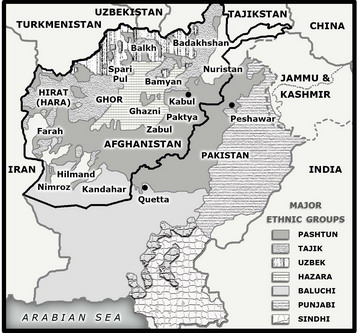
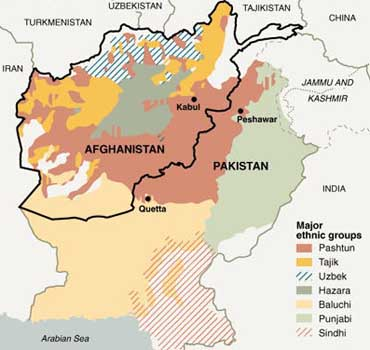
The Pathans number 6 to 7 million in Afghanistan and 7 to 8 million in Pakistan. They live in the border area between these two countries and about 2 million live as nomads. These Pathans desire for their independence, which is supported by Afghanistan and is a cause of constant tension in Pakistan which does not desire their independence.
Pathans' Law Resembles the Torah
Afghanistan is one of the least developed countries of Asia and the majority of the population is illiterate. They work primarily in farming and sheep-raising and other domesticated animals.
Most people still live in villages and some even live as nomads. It is a country that is ruled by Islamic religious law and more than 90 % of the population are Sunni Muslims. But whatever modernization has taken place, it has not reached the mountainous border areas. Here the Pathans continue their centuries old tribal life.
The legal system which is known as Pashtunwali, the law of the Pashtu, is very similar to the Torah, which is the holiest Jewish book and the book of ancient Jewish way of life. There are pages and even complete books among the pathans and they honor greatly what is called Tavrad El Sharif (the Torah of Moses), and they rise at the mention of the name of Moses even though it is not important in Islam.
The Pathans are very healthy, tall, and have strong light-skinned appearance. They are warriors and carry arms from a young age, they are hardworking, wise, truthful and extremely loyal and they also have a worldwide reputation for exemplary hospitality.
The ethnic origin of these Pathans has puzzled people for some time because they are different both externally and in the character traits from the other groups around them such as the Turks, the Mongolians, the Persians, or the Indo-Iranians. It is also difficult to trace their past history in a region in which tens of nations and major tribes of various origins have come and gone.
The personal identification of the Pathan Tribes with their Israelite origin is expressed in various ways. Besides the oral tradition related by the elders of the tribe, there are also interesting testimonies of keeping of scrolls of genealogy among the tribes, reaching back to the Fathers of the Jewish nation.
These scrolls are well preserved and some are written in gold on the skins of a doe. No less interesting and significant are the names of the tribes which bear close resemblance to the Tribes of Israel. The Rabbani Tribe is really Reuben, the Shinware Tribe is Shimon, the Lewani Tribe is Levi, The Daftani Tribe is Naphtali, and the Jaji Tribe is Gad, and the Ashuri Tribe is Asher, The Yusefsai Tribe is sons of Joseph, and the Afridi Tribe is really Ephraim. These are the names of the Ten Lost Tribes of Israel.
The Pathans themselves point out the differences between the original names of the tribes and their present names are because of the different dialects of the languages so that, for instance, Jaji was actually called Gaji for the tribe of Gad.
There are some Jews of Afghanistan today who count the Tribe of Israel among the Pathans. The physical similarity between the Pathans and other Jews is exemplified by the British ruled Afghanistan for a great length of time and called the Pathans Jews. When not wearing their traditional clothing Pathans are indistinguishable from other Jews of the area. Among the 21 nations of Afghanistan only the Pathans and the Jews have Semitic features, their faces are longer and lighter, and some even have blue eyes. Like the Jews of the area, Pathans grow beards and sidelocks which further serve to make them indistinguishable from Jews.
Israeli Features of the Pathans
The Pathans have many other features as descendants of Israelites.
Their wedding is like Jewish. Wedding ceremony with the Pathans includes a marriage canopy and rings similar to the Jewish custom.
Women of the Pathans keep laws similar to the Jewish laws regarding menstruation. During this time and for 7 days after, no contact is allowed with the husband. After this period, the woman immerses in a river or spring or in a bathhouse if a natural spring is not available. This is exactly the same as the Israeli tradition going back to the days of the Bible.
Pathans have custom of levirate marriage, which is the custom when a husband dies without children, his brother marries the widow to keep the name of the house. This custom no longer exists today, but was an ancient Israeli custom mentioned in the Bible (Deuteronomy 25:5-6).
The commandment to honor one's parent is kept in exemplary manner in these tribes. The son must obey the parents in all matters. When the father enters the room all stand and bow their heads in his honor. This was a Israeli tradition as well.
Pathans have custom of Yom Kippur. We know of some of the members of the Lewani Tribe who came to the Jewish synagogue on Yom Kippur each year in Afghanistan. He would stay there until sundown without uttering even one word. He spoke of the tradition of the Temple on this day and of the high priest and his work there.
One year he erred in his calendar and did not come, he wept bitterly for one week for missing the observance of this day.
The Pathans have custom of scapegoat. In ancient Israel there was the custom to put sins of the nation onto a goat and send the goat away to desert. This custom of scapegoat was done to atone the sins of the nation (Leviticus chapter 16). Similar custom is found even today among the Pathans.
The Pathans usually pray in mosque. However some pray towards Jerusalem which is most unusual. There are some very old synagogues in their area and Pathans come to these synagogues on special days in times of great stress or tragedies or for special prayers. The individual who seeks help comes there to touch the lock and to pray. There are those who say that these places once contained scrolls of the Torah. This is interesting because today they are actually devout Muslims.
At the time of plague the Pathans slaughter a sheep and sprinkle its blood on the doorpost of their homes. This is what the Israelites did in ancient Egypt during the plagues that occurred there.
An interesting testimony relates to the placing of a wrapped book of Psalms of the Bible under the pillow of the ill in order to heal that person.
There are those who have said that there are Amulets written in Hebrew. Some contain the phrase "Shema Israel" and it is secretly written by the head of the tribe and it is forbidden to open it.
And the symbol of Shield of David (Star of David) is found in almost every Pathan house. The wealthy make it out of expensive metals and the poor out of simple wood. It can be seen in towers, in schools and also in tools, bracelets, and jewelry. I saw it at least 20 times in a variety of places. In Minerajan, the center of Afghanistan, there are even schools that have the Shield of David on the door or in the stone above the door.
Other Claimants to being the Lost Ten Tribes in Afghnaistan and the Region
See also:
Brit-Am Answers to Queries Concerning Other Claims to being the Lost Ten Tribes
Baluchis from Syria?
The Baluchis do not claim to be descended from Israel but rather from Syrians which is in the area of Ancient Israel.
Many Balochistan in Pakistan claim that they are descendents of
Aleppo in Syria.
Balochistan (Pakistan)
http://en.wikipedia.org/wiki/Balochistan,_Pakistan
Today, many Balochis believe that their origins are Semitic and not Iranian contrary to linguistic and historical evidence. Balochi tradition holds that they left their Aleppo homeland in Syria at some point during the 1st millennium CE and moved to Balochistan, but it appears more likely that the Balochis are an Iranian group who have absorbed some Arab ancestry and cultural traits instead. Balochistan subsequently was dominated by empires based in Iran and Afghanistan as well as the Mughal empire based in India.
Alternate Origins for the Afghans and Company
Josephus Antiquities: From Shem but NOT Israel
Now Joctan, one of the sons of Heber, had these sons, Elmodad, Saleph, Asermoth, Jera, Adoram, Aizel, Decla, Ebal, Abimael, Sabeus, Ophir, Euilat, and Jobab. These inhabited from Cophen, an Indian river, and in part of Asia adjoining to it. And this shall suffice concerning the sons of Shem.
Edom
Afghanis apparently received from Jewish sources the concept that Esau (Edom) was the ancestor of Rome.
They therefore claimed that they too were descended from Esau and blood-brothers to the Romans.
Alexander
They claimed descent from the soldiers of Alexander the Great.
Cyrus
They claimed descent from the soldiers of Cyrus the Great of Persia.
Parthians
de Gobineau traced the Pathans to remnants of the Parthians whpo once controlled Persia and the Middle East. The Parthians werre overthrown by the Sassanians and de Gobineau suggests that groups of Parthian nobles fled to Afghanistan. As one of his proofs de Gobineau cites the presence of Jewish customs amongsts the Pathans. Many Parthians took an interest in both Judaism (some converted|) and in Nestorian Christinaity that used many Jewish customs.
North Africa
Godbey quotes a source saying that the Afghans were originally a Berber group from North Africa transferred by Nebuchadnessar to Afghanistan.
Sources for the Israelite Notion
http://www.afghanology.com/BaniIsraeli.html
Bani-Israelite Theory of Paktoons Ethnic Origin
In consonance with political hostility between Mughals and Pakhtoons, there also existed a deep cultural bias between the two rivals. The two sides didn't spare any opportunity of letting each other down, so more true of Mughals. The story goes, and it also has been recorded in "Makhzan-i-Afghani", that one day Khan Jehan Lodhi was attending the court of the Mughal Emperor Jehangir, when an Iranian emissary passed a very derogatory remark about the origin of Pakhtoons to appease Jehangir. Hurt by the remark, Khan Jehan was prompted to have Pakhtoon history compiled by his subordinates, Haibat Khan Kakar, Hamza Khan Tokhi, Zarif Khan Yousafzai, and Nematullah Harvi. As Mughals, the rivals of Pakhtoons, were claiming racial supremacy through descend from "Yafs" son of "Noah", the compilers of Makhzan strove to prove Pakhtoons Israelites for ethnic superiority over Mughals and so came up with Makhzan-i-Afghani. Later Pakhtoon historiographers quoted heavily from Makhzan-i-Afghani because of its being the only written source about the origin of Pakhtoons.
Thus the Israelitish theory of Pakhtoon origin not only was accentuated but also turned into a tradition. The theory was current till the beginning of the 20th century when it came under severe criticism from scholars for a number of reasons; mainly for its contradictions with Hebrew Scriptures, its historical inconsistencies, and the linguistic characteristics of Pashtu that classify it an Aryan Language instead of Semitic. The Bani-Israelite theory, and correspondingly Makhzan-i-Afghani, have degraded to a fairy-tale in their worth as a plausible interpretation of Pakhtoon origin as a result of the research of the 20th century. Makhzan-i-Afghani, however, has retained its significance as a good source of information about the genealogical and tribal constitution of Pakhtoon society.
Political Dimension of Bani-Israelite Theory:
Interestingly, in its own time, the authenticity of Makhzan-i-Afghani had been questioned by the people now projecting it as a propaganda tool because it gave Pakhtoons a superior status by declaring them as the descendents of prophets. Pakistani government helped propagate it to emphasize Pakhtoons as a people of faith and so to help strengthen Pakhtoons bond with Islamic ideology of Pakistan vis-a-vis the infidel India. Now that the Bani-Israelite theory about Pakhtoon origin has been scientifically proved untenable, people initially objecting to it have reverted to the opposite viewpoint of its being authentic for political motives to dub Pakhtoons a sort of foreigners in their historical land.
Inconsistencies of Bani-Israelite Theory rendered By Makhzan:
Makhzan traces Pakhtoon's origin from the super-Patriach Abraham down to one named King Talut or King Saul. The description of Makhzan to this point agrees to a certain degree to the testimony provided by Muslim sources or Hebrew Scriptures, which affirm the existence of King Saul around B.C. 1092 in Palestine. It is actually beyond this point that the authenticity of the description comes under serious doubt.
Makhzan-i-Afgani further maintains that Saul had a son Irmia(Jeremia) who again had a son called Afghana raised by King David upon the death of King Saul and later promoted to the chief command of the Army during the reign of King Solomon. Fortunately or unfortunately, there is no evidence to the existence of characters like Irmia or Afghana in Herbew Scriptures or to the events associated with these characters.
The description then makes a sudden jump to 6th century B.C. when Bakhtunnasar or Nebuchadnezzar king of Babul attacked Judah and exiled Bani-Israel, the progeny of Afghana, to Ghor in Afghanistan. Here arises a great contradiction with what the Herbew Scriptures state. According to Scriptures, Nebuchadnezzar brought Jews in captivity to Babul where they remained till Cyrus, the King of Persia from B.C. 550 to B.C. 529, attacked Babul, freed Jews of captivity, and allowed them to return to Jerusalem. Herbew Scriptures praise Cyrus greatly for this favor.
So, Cyrus didn't send the Jews captives to Ghor but rather to Jeruslem.
There is one other inconsistency here and that is the failure of Makhzan-i-Afghani to differentiate between Judah and Bani-Israel. This inconsistency has crept in because Makhzan has copied the tale of Jewish captivity from Muslim sources and Muslim sources weren't well acquainted with Jewish history. In fact, after Solomon, around B.C. 900, Jewish Kingdom had split into two states, one Samara controlled by two tribes of Judah and the other Jeruslem ruled by ten tribes of Bani-Israel. Before the attack of Nebuchadnezzar on Judah, the Assyrian king Shalmaneser had raided the Bani-Israelites state in B.C. 721 and sent the ten Bani-Israelite tribes in exile to Media, the North-Western part of today's Iran. It is these ten tribes which the Herbew historians have mentioned to have been lost and not the two tribes of Judah exiled by Nebuchadnezzar to Babul around B.C. 580 but allowed by Cyrus to return to Jeruslem. The Persian Empire didn't exist at the time of first Jewish captivity(B.C. 721) and had been founded later by Cyrus in B.C. 550. Plausibly the ten exiled tribes mingled with the local population of Media or dispersed over to Russia and Eastern Europe. Whatever, these contradictions cost serious doubts on the Makhzan account of Jewish captivity and so undermines its authenticity.
There are numerous other inconsistencies in Makhzan. For example its account of the conversion of the Pakhtoons to Islam in entirety under the spiritual guidance of the mythical character Qais-Abdul-Rashid who, as Makhzan informs, paid pilgrimage to Madina, embraced Islam at the hands of the Prophet(PBUH) himself and then returned to Ghor to have the whole of Pakhtoon people converted to Islam is neither testified by Islamic tradition nor history. Rather, historians have recorded the existence of infidel Pakhtoons at a period as later as 11th century A.D. Moreover, Makhzan states Khalid bin Walid to be a kinsman of Pakhtoons who sent Pakhtoons, in waiting for the new prophet to appear, about the advent of Islam. There is no reference to this fact in any source whether Islamic or Arab. Historians rather have stated Khalid bin Walid to be a respectable member of the Kuresh tribe.
Theory of Pashtun descent from Israelites
http://en.wikipedia.org/wiki/Theory_of_Pashtun_descent_from_Israelites
From Wikipedia, the free encyclopedia
according to the Encyclopaedia of Islam, the theory of Pashtun descent from Israelites is traced to Maghzan-e-Afghani who compiled a history for Khan-e-Jehan Lodhi in the reign of Mughal Emperor Jehangir in the 16th century CE. Maghzan-e-Afghani's Bani-Israel theory has largely been debunked due to historical and linguistic inconsistencies. The oral tradition is a myth that grew out of a political and cultural struggle between Pashtuns and Mughals.
Bukhtawar Khan in his most valuable universal history Mirat-ul-Alam – The Mirror of the World – gives a vivid account of the journeys of the Afghans from the Holy Land to Ghor, Ghazni, and Kabul. Similarly Hafiz Rahmat bin Shah Alam in his Khulasat-ul-Ansab and Fareed-ud-Din Ahmad in Risala-i-Ansab-i-Afghana provide the history of the Afghans and deal with their genealogies.
Two of the most famous historical works on the subject are Tarikh-i-Afghana – History of the Afghans – by Niamatullah, which was translated by Bernard Dork in 1829, and Tarikh-i-Hafiz Rahmatkhani, by Hafiz Muhammad Zadeek which he wrote in 1770. These books deal with the early history of the Afghans, their origin and wanderings in general. They particularly discuss the Yusuf Zyes (the Yusefzai, "Sons of Joseph") and their occupation of Kabul, Bajoor, Swat, and Peshawar.
Additional authors Syed Jamal-ud-Din Afghani (Tarikh-i-Afghana, the History of Afghans), and Syed Abdul Jabbar Shah (Mun'ameen-i-Bani Israel, MS.), ex-Ruler of Swat, discuss the question exhaustively and come to the conclusion that the Afghans represent the Lost Tribes of Israel as viewed from the perspective of the Jewish/Western world.
Sir Alexander Brunes in his Travels into Bokhara, which he published in 1835, speaking of the Afghans said: "The Afghans call themselves Bani Israel, or the children of Israel, but consider the term Yahoodi, or Jew, to be one of reproach. They say that Nebuchadnezzar, after the overthrow of Israel, transplanted them into the towns of Ghore near Bamean and that they were called after their Chief Afghana… they say that they lived as Israelites till Khalid summoned them in the first century of the Mohammadans… ]]… Having precisely stated the traditions and history of the Afghans I see no good reason for discrediting them… the Afghans look like Jews and the younger brother marries the widow of the elder. The Afghans entertain strong prejudices against the Jewish nation, which would at least show that they have no desire to claim – without just cause – a descent from them. [Sir Alexander Brunes, Travels into Bokhara, Vol. 2:139-141.]
Brunes was again in 1837 sent as the first British Envoy to the Court of Kabul. For some time he was the guest of King Dost Muhammad Khan. He questioned the King about the descent of the Afghans from the Israelites. The King replied that "his people had no doubt of that, though they repudiated the idea of being Jews".
J.B. Frazer in his book, An Historical and Descriptive Account of Persia and Afghanistan, which he published in 1843, says: "According to their own tradition they believe themselves to be descendants from the Hebrews… they preserved the purity of their religion until they met with Islam." [J.B. Frazer, A Historical and Descriptive Account of Persia and Afghanistan, 298]
J.P. Ferrier wrote his History of the Afghans in 1858. It was translated by Capt. W. M. Jesse. He too was disposed to believe that the Afghans represented the Ten Tribes of Israel. In support of his view he recorded, among others, a very significant fact: “When Nadir Shah marching to the conquest of India arrived at Peshawar, the chief of the tribe of Yoosoof Zyes (Sons of Joseph) presented him with a Bible written in Hebrew and several other articles that had been used in their ancient worship and which they had preserved. These articles were at once recognized by the Jews who followed the camp.” – J.P. Ferrier, History of the Afghans, 4.
In this work he mentions Killa Yahoodi ("Fort of the Jews") (H.W. Bellew, An Enquiry into the Ethnography of Afghanistan, 34), as being the name of the eastern boundary of their country, and also speaks of Dasht-i-Yahoodi ("Jewish plain") (ibid., 4), a place in Mardan District. He concludes: "The Afghan’s accounts of Jacob and Esau, of Moses and the Exodus, of the Wars of the Israelites with the Amalekites and conquest of Palestine, of the Ark of the Covenant and of the election of Saul to the Kingdom, etc., etc., are clearly founded on the Biblical records, and clearly indicate a knowledge of the Old Testament, which if it does not prove the presence of the Christians at least corroborates their assertion that the Afghans were readers of the Pentateuch up to the time of the appearance of Mohammad." (Ibid., 191)
Note, it is well understood and undisputed that there have never been Christian communities in Afghanistan pre- or for many centuries after the dawn of Islam.
Thomas Ledlie wrote an article in the Calcutta Review, which he subsequently elaborated and published in two volumes. He expressed his views on the subject very clearly: "The Europeans always confuse things, when they consider the fact that the Afghans call themselves Bani Israel and yet reject their Jewish descent. Indeed, the Afghans discard the very idea of any descent from the Jews. They, however, yet claim themselves to be of Bani Israel." [Thomas Ledlie, More Ledlian, Calcutta Review, January, 1898]
Ledlie goes on to explain: "Israelites, or the Ten Tribes, to whom the term Israel was applied – after their separation from the House of David, and the tribe of Judah, which tribe retained the name of Judah and had a distinct history ever after. These last alone are called Jews and are distinguished from the Bani Israel as much in the East as in the West." [Ibid., 7]
Sir Thomas Holditch in his The Gates of India says: "But there is one important people (of whom there is much more to be said) who call themselves Bani Israel, who claim a descent from Cush and Ham, who have adopted a strange mixture of Mosaic Law in Ordinances in their moral code, who (some sections at least) keep a feast which strongly accords with the Passover,… and for whom no one has yet been able to suggest any other origin than the one they claim, and claim with determined force, and these people are the overwhelming inhabitants of Afghanistan." – Sir Thomas Holditch, The Gates of India, 49.
|
2. Ken Blady Interviewed; Afghan Nazi Involvement in WW2.
"Jews in Afghanistan" by Aleza Goldsmith
/Jewish Bulletin of Northern California
Jewsweek.com | While most Taliban extremists have never even seen a Jew,
Afghanistan was, not so long ago, home to a thriving Jewish community.
As recently as the beginning of the 20th century,
more than 40,000 Jews actually lived there quite
peacefully, says Ken Blady, a Jewish educator,
writer and lecturer on the subject of Jews in
remote areas of the world.
Yet today, says the Berkeley resident and author
of Jewish Communities in Exotic Places, there is
"not a single Jewish person left there that we
know of." By the time the Taliban rose to power in
the mid 1990s, the land of Afghanistan -- which
once provided immunity for Jews from the Shiite
Muslims of Persia -- was pretty much devoid of
Jews.
When Genghis Khan invaded Afghanistan in the
early 1200s and "totally demolished what was an
advanced country with prestigious and liberal
universities," he also wiped out a large percentage
of the Jewish people there.
But they later began trickling back in, especially in
the 1800s when the Shiites began to forcibly
convert them.
"In Persia they had a choice between the sword or
conversion to Islam," says Blady. "Afghanistan was
not quite as intolerant. Jews...were not allowed to
be forcibly converted."
Jews, along with Christians and Zoroastrians,
however, were to be constantly reminded of their
inferiority. They were not allowed to build a
synagogue that was higher than a mosque and
they could not ride on horses, "which were
reserved for higher castes."
Most Jews worked in crafts, dyeing carpets, or as
peddlers, importers and exporters.
"They had a rigid place in society and were
generally protected by the law. Just as you
wouldn't kick your dog, you wouldn't kick a Jew."
With the Jews' early and long connection to
Afghanistan, it is not wholly surprising that British
colonists once pointed out "something unusually
Jewish about Afghans," says Blady. "They wore
earlocks and shawls, and it is even claimed that
they lit candles on Friday nights."
But despite this amalgamation of Jewish tradition,
Blady says the claim of some Muslim Afghan tribes
that they are descended from the Ten Lost Tribes
is a false one.
The Pashtun people, of
which the Taliban are a
part, for instance, claim
they were Jews who
converted to Islam
under the advice of
another Jewish convert
to Islam, a disciple of
Muhammad, during the
eighth century, he
says. They claim that
the city of Kabul
"stands for Cain and
Abel" and that the
name Afghanistan is derived from the grandson of
King Saul of the tribe of Benjamin, Afghana.
Blady calls this mythology. "They are Aryan,
Kurdish, Iranian people, not Semitic at all," he
says. They created this mythology about
themselves in order to lord it over people -- to
say, when all else was primitive and barbaric, they
were already monotheistic."
Blady says this Aryan descent is partly why the
Nazis tried to establish solidarity with the Afghans
during World War II.
"They began dropping leaflets from the skies to
establish hatred and tension towards the Jews."
Many were killed in massacres. Others fled to
Bombay, pre-state Israel, Italy, England and
America with the help of various Jewish
organizations.
The few hundreds of Jews remaining in
Afghanistan after the war left when the Soviets
invaded in 1979.
"By the time the Taliban came to power there was
only one Jewish family left. Then, about two years
ago, they also managed to leave."
"
Brit-Am"-624
#1. Questions and Comments from Kyrgistan with Brit-Am Answers
"
Brit-Am"-637
#2. Questions
What about the Pathans?
"
Brit-Am"-764
#1. Magog in Iran, Afghanistan, Pakistan?
Japan
"
Brit-Am Now"-497
#11. Are there Israelites in Afghanistan?
"
Brit-Am Now"-530
#4. Jeremy Burningham: Non-Brit-Am Explanations are incorrect
"
Brit-Am Now"-803
#3. Afghanistan: Questions
Join the Brit-Am Ephraimite
Discussion Group
Just Send an
e-mail
with "Subscribe"
in the Subject Line
Main Page
Offerings and Publications
Return to Question and Answer
Table of Contents